
Storefront doors are the workhorses of any commercial space. Unlike interior office doors that open a few times a day, a storefront door might cycle hundreds or even thousands of times depending on the business. Every customer, every delivery, every employee entry adds a little more strain. Aluminum and metal doors are designed to stay light and easy to operate, but that same lightweight design means the hardware inside must carry the full load. When the door shifts even a small amount, the lock begins to show signs of stress. That’s why storefront lock repair is one of the most common commercial locksmith services across Scarborough and the GTA.
Many business owners only notice a problem when the lock becomes stiff or the latch doesn’t catch properly. But these issues start long before the lock fully breaks. Door movement from weather, heavy traffic, and worn pivots slowly pushes the lock out of alignment. Dirt and moisture from the street make their way into cylinders, wearing out the internal pins. Handles loosen over time, and mortise hardware begins to grind internally without anyone realizing it. Once the door stops closing smoothly or the key won’t turn the way it used to, the lock is already asking for attention. A proper repair brings everything back into alignment and prevents future lockouts or security risks.
It’s easy to overlook how much a storefront door goes through in a day. Aluminum frames expand and contract with the temperature. Commercial glass doors are pushed from the center instead of the handle. Employees sometimes slam the door during busy hours. Delivery drivers hold the door open with boxes. Even the building settling slightly over time changes how the door sits in its frame. All of this creates small shifts that affect the lock’s performance.
Because storefront locks sit inside narrow aluminum stiles, there isn’t much room for error. If the door drops even a few millimeters, the latch may scrape or miss the strike entirely. If the cylinder becomes dry or dusty, it starts sticking. When the internal parts wear out from constant use, the entire locking system becomes unreliable. The good news is that these issues can usually be repaired without replacing the entire door or frame. A trained locksmith can diagnose the source—whether alignment, hardware wear, or cylinder failure—and restore smooth operation.
Most commercial storefronts use mortise locks because of their strength and durability. But like any mechanical system, they eventually wear out. One of the most common problems is spindle wear. When the spindle begins grinding down, the handle feels loose and may not retract the latch completely. Business owners often notice this when the door doesn’t latch unless it’s pulled firmly shut.
Latch collapse is another frequent issue. The latch may stop popping out fully, get stuck halfway, or retract only partway when the handle turns. This is usually caused by worn springs inside the lock body. Over time, the springs lose tension, and the latch becomes unreliable. Some shops also experience cylinder issues, where the key becomes hard to turn, the cylinder sticks, or it begins accepting worn keys too easily. That’s a sign that the internal pins and components are wearing out.
Repairing a mortise lock isn’t just about replacing one part. It requires opening the lock body, identifying the worn components, and restoring the entire mechanism to full strength. When done properly, a repaired mortise lock can last many more years without needing replacement.
Push paddles and pushbars are common in retail stores, offices, and service businesses because they allow for fast exit and easy operation. But they take a beating. When customers hit the bar with their shoulder or push the paddle with packages, the internal mechanism begins to wear. Eventually, the paddle might feel loose or stop springing back. The pushbar may not fully retract the latch, causing the door to stay slightly ajar.
In many cases, the push hardware itself is not the real problem. If the door frame shifts or the hinges loosen, the latch and strike stop lining up properly. From the outside, it looks like the lock is failing, but the actual issue is alignment. A commercial locksmith will check both the hardware and the door fit to determine the correct repair. Restoring the alignment usually brings the pushbar or paddle back to smooth, reliable operation.
Aluminum storefront doors depend heavily on pivot hinges. When those pivot points begin to drop, the entire door lowers.
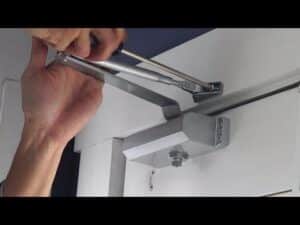
Adjusting or replacing the pivot hinge raises the door back into place. When done correctly, the latch lines up again, the lock turns smoothly, and the door closer works without straining. A professional locksmith always checks the hinges, the closer, and the lock together because they function as one complete system. Fixing only the lock without correcting the alignment will lead to fast wear and repeated failures.
The cylinder is the part of the lock that gets the most direct use. Keys go in and out repeatedly, dirt gets inside, and winter weather causes the internal components to dry out. After years of commercial traffic, the cylinder starts sticking or requires extra pressure to turn. Sometimes it begins accepting the wrong key shape, which is a sign that the pins are worn.
Replacing the cylinder is a simple and effective upgrade. A fresh, properly fitted commercial-grade cylinder makes the lock feel new again and improves overall security. For businesses that rely on multiple employees accessing the door, a smooth, reliable cylinder prevents unnecessary frustrations and reduces downtime.
A storefront lock works best when every component—from the mortise body to the latch, cylinder, pivot hinge, and closer—fits and moves together the way it was designed to. When even one part shifts or wears down, the whole system begins to show signs of trouble. Professional repair brings everything back into balance. The door closes cleanly, the lock latches without hesitation, and employees can secure the building at closing time without struggling.
Regular servicing prevents sudden lockouts, keeps hardware from wearing out prematurely, and ensures your business remains accessible and secure. For any storefront dealing with sticking locks, misaligned doors, loose handles, or cylinders that won’t turn smoothly, a professional repair is the most cost-effective way to restore safety and reliability.